




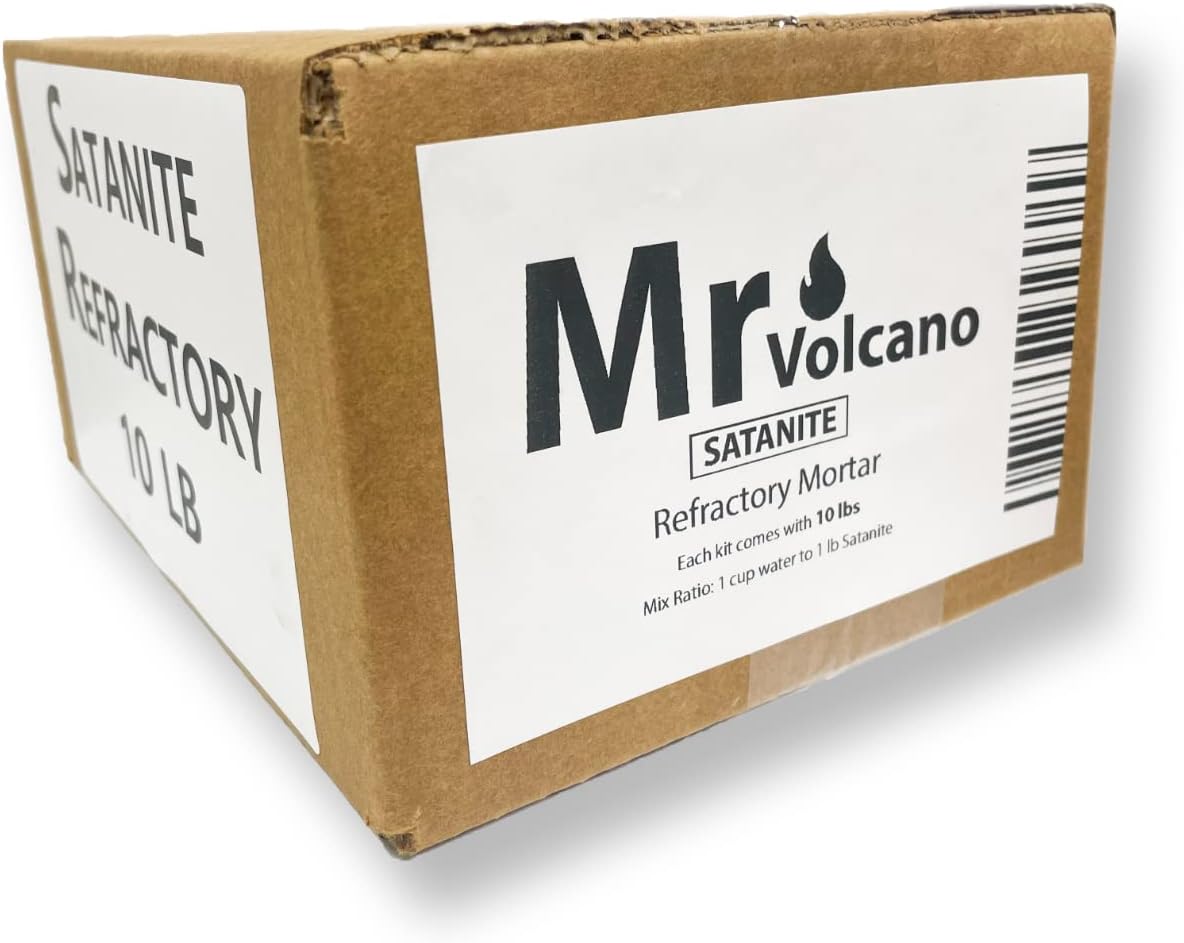
Refractory Satanite 10 Pounds for Ceramic Blanket Lining 3200 Degree Mortar

 4.5 (103 items)
 Limited Time Sale
US$23.10 cheaper than the new price!!
Free cash-on-delivery fees for purchases over $99
Product details
| Management number | 224608998 | Release Date | 2026/05/09 | List Price | US$15.40 | Model Number | 224608998 | ||
|---|---|---|---|---|---|---|---|---|---|
| Category | |||||||||
Mr Volcano Refractory Satanite (10 lb) is a high-temperature mortar designed to seal and protect ceramic fiber blanket and create a smooth, durable hot face in gas forges, heat-treat ovens, kilns, and similar high-heat tools. With a 3200°F working rating and a simple brush-on mix, it gives you a tough lining that resists erosion without adding the thermal mass of heavy castables.How it’s used (quick start): • Pre-wet the exposed blanket, then mix Satanite with water to a creamy, brushable consistency. • Apply two thin coats, letting each coat dry thoroughly. • Cure slowly with short, low‐heat firings, increasing time in small increments to drive off residual moisture. This thin-build approach preserves fast heat-up while giving your insulation a protective hot-face layer.What’s in the bag: 10 lb Satanite refractory mortar (powder). Mix with water for use. PPE recommended when handling refractory materials.Typical Solutions People Use → Cons → How This Product Solves ItRigidizer only on ceramic blanket: Cons: A rigidizer will harden or stabilize the fibers but typically does not provide a robust wear-resistant hot face designed for repeated flame contact, and may be limited in temperature rating. How Satanite solves it: It adds a true refractory hot face layer over the blanket with a working rating of 3200°F, providing abrasion resistance and flame durability rather than just fiber stabilization.Stove/furnace cement or generic mortar: Cons: These are often designed for masonry or metal-furnace joints, may be limited to ~2000°F or less, can be brittle in thin coats over fiber, and aren’t optimized for ceramic blanket surfaces. How Satanite solves it: Purpose-built for coating ceramic fiber blanket, offering the higher temperature rating, the proper consistency for thin brush-on coats, and designed for this use rather than just patching brick.Dry flue-tile refractory mortar: Cons: Intended for brickwork and flues, typically rated lower (~2550°F), not designed for thin coating over fiber insulation, and may compromise insulation performance when used incorrectly. How Satanite solves it: Higher temperature rating and formulated as a thin build mortar for fiber use; preserves the blanket's benefits (light weight, fast heat-up) while giving you a protective hard surface.Castable refractory lining (thick, structural): Cons: Adds significant thermal mass, slows down heat-up times, requires thicker build, heavier structure, and may not be ideal for small shop forges or fast cycling equipment. How Satanite solves it: Provides the same protective hot face in thin-build form, allowing you to retain the fast heat-up and low thermal mass benefits of ceramic fiber blanket while still protecting it effectively.No coating (raw blanket exposed): Cons: Exposed ceramic fiber blanket is vulnerable to abrasion, hot-gas erosion, fiber damage, and, importantly, fiber release which can pose serious health risks (see next section). How Satanite solves it: Creates a sealed, hardened surface that encapsulates the fiber blanket, significantly reducing fiber exposure, dusting, and surface wear — making the lining much safer and more durable.Health & Safety Emphasis: Why Coating or Rigidizing MattersHandling or using raw “blanket” ceramic fiber (also called refractory ceramic fiber, or RCF) is not risk-free. Studies by National Institute for Occupational Safety and Health (NIOSH) document that workers exposed to RCFs had increased respiratory symptoms, reduced lung function, and pleural plaques in manufacturing settings. Further reviews note that RCF is classified as “possibly carcinogenic to humans (Group 2B)” due to animal evidence of lung tumors and mesothelioma in high-dose exposures. Another review from the EU warns that inhalation of airborne RCF fibres and dust may increase risk of lung cancer and other chronic lung diseases. Users in hobby blacksmithing communities also recognize the risk of exposure when blanket is left unsealed.Bottom line: even though hobby exposure may be lower than industrial settings, it makes sense to act with caution. Sealing or rigidizing the blanket *and* coating it with a durable hot-face mortar increases safety and reduces the chance of airborne fibres, dust and long-term lung risk.Strong Recommendation: Use Mr Volcano Rigidizer FirstBefore applying Satanite, it is highly recommended to treat your ceramic fiber blanket with Mr Volcano Rigidizer. Rigidizer helps to stiffen and stabilize the fiber blanket, lock down loose fibers, reduce dusting and make the surface more uniform for the subsequent mortar coating. The workflow becomes:Install the blanket properly.Apply rigidizer and allow it to cure/dry per its instructions.Then apply Satanite in the thin-coat process described above.This two-step process ensures you get the long-wear hot face performance *and* the added safety benefit of lower fiber release and dust generation.Pro TipsWear proper PPE when handling ceramic blanket and applying coatings: respirator rated for fine fibers, safety glasses, gloves and long sleeves.Ensure your workspace is clean and dust-controlled; vacuum with a HEPA filter or use wet methods to suppress airborne fibers when trimming blanket.When mixing Satanite, aim for the consistency of sour-cream for best brush-on performance — not too dry, not too puddled.Apply **two thin coats** rather than one heavy coat — this ensures proper adhesion and reduces cracking.Cure slowly: start with short, low-temperature firings (for example 200-300°F) and step up gradually to full working temperature. This helps drive off moisture and avoid spalling or cracking of the coating.Spot-inspect your lining floor (or hearth) frequently: that area takes the most abuse from workpieces. Consider extra thickness of Satanite or a sacrificial refractory tile there.If you ever cut or repair the blanket later, reapply rigidizer to the exposed area before re-coating with mortar.Specifications (for reference)Type: High-temperature refractory mortar / ceramic fiber coatingWorking temperature: 3200°FUsage form: Powder — mix with water to a brushable consistencyApplication: Thin build on properly installed and rigidized ceramic fiber blanketKit: 10 lb bagIdeal for: Ceramic blanket hot face in forges, kilns, furnaces; knife-heat-treat hamon clay; patching refractory linings where quick startup is helpful.
- Purpose‑built hot face for ceramic wool: Forms a hard, durable coating on ceramic fiber blanket to protect the lining and smooth the chamber surface in forges, kilns, and furnaces.
- 3200°F working rating: High‑temperature refractory mortar that stands up to forge heat and repeated thermal cycling.
- Brush‑on, thin‑build application: Mix with water to a “sour‑cream” consistency and apply in thin coats for a tough hot face without the weight of castables.
- Easy curing schedule: After air‑drying, cure in short, incremental heat cycles to vitrify the lining and reduce cracking.
- 10 lb bag
| UPC | 787416724903 |
|---|---|
| ASIN | B0BSLVC3FK |
| Color | White |
| Brand Name | MR VOLCANO |
| Model Name | Refractory |
| Item Weight | 10 Pounds |
| Manufacturer | MR VOLCANO |
| Model Number | 10 Pounds |
| Material Type | Ceramic |
| Item Type Name | Refractory Coating |
| Number of Items | 1 |
| Age Range Description | Adult |
| Manufacturer Part Number | MVRC 10 Pounds |
Bestseller ranking
Filters

Correction of product information
If you notice any omissions or errors in the product information on this page, please use the correction request form below.
Correction Request Form